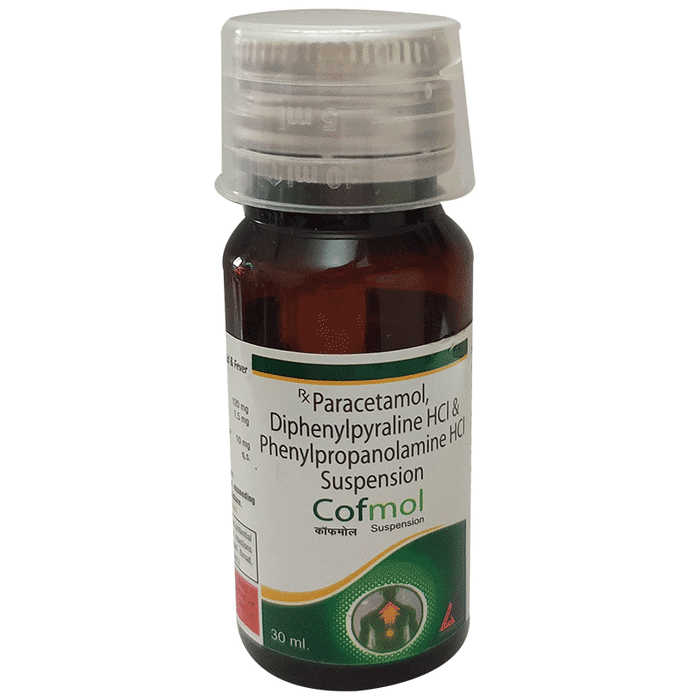
Cofmol Oral Suspension
In Treatment of Common cold Cofmol Oral Suspension is a combination medicine that effectively relieves symptoms of the common cold, such as headache, fever, blocked nose, runny nose, watery eyes, sneezing, and congestion or stuffiness. Take it as prescribed by…


About this Medicine
Cofmol Oral Suspension is used in the treatment of common cold symptoms like runny nose, stuffy nose, sneezing, watery eyes and congestion or stuffiness. It is also used to relieve pain and fever. Cofmol Oral Suspension may be taken with or without food. Take it in the dose and duration as advised by the doctor. The dose you are given will depend on your condition and how you respond to the medicine. Keep taking this medicine for as long as your doctor recommends. If you stop treatment too early your symptoms may come back and your condition may worsen.The most common side effects include nausea, vomiting, diarrhea, dryness in mouth, and fatigue. Most of these are temporary and usually resolve with time. Contact your doctor if any of these side effects persist or get worse. They may be able to suggest ways to reduce or treat the symptoms.Never support self-medication or recommend your medicine to another person. It is beneficial to have plenty of fluids while taking this medication. Before taking this medicine, you should tell your doctor if you have any kidney or liver diseases so that your doctor can prescribe a suitable dose for you. Let your doctor also know if you are pregnant, planning pregnancy or breastfeeding.
How it Works
Cofmol Oral Suspension contains paracetamol, diphenylpyraline, and phenylpropanolamine. Paracetamol works by inhibiting the production of certain chemicals (prostaglandins) in the brain that are involved in the transmission of pain signals and the regulation of body temperature. Diphenylpyraline is an antihistamine, which means it helps counteract the effects of histamine, a substance released during allergic reactions. Phenylpropanolamine is a decongestant that works by constricting blood vessels, particularly those in the nasal passages. This leads to a reduction in nasal congestion and an improvement in airflow, making it easier to breathe. Together, these three components provide a combination of pain relief, antihistamine action for allergy symptoms, and decongestant action for nasal congestion.
Key Facts
Habit Forming :: No|Therapeutic Class :: RESPIRATORY
Safety Overview


Not sure if this medicine is right for you?
Consult a certified doctor for personalised medical advice.